
Learn how Azure Stack Hub brings Azure innovation to your datacenter, powering hybrid, edge, and disconnected cloud solutions.
🌍 Introduction: Why Hybrid Cloud Needs a Local Hero
In today’s cloud-first world, the need for local control, regulatory compliance, low-latency computing, and disconnected environments has grown tremendously. While public Azure is powerful, enterprises often face constraints where cloud isn’t enough. This is where Azure Stack Hub comes into play—a robust solution designed to bring Azure services to your own datacenter.
Azure Stack Hub is not just a private cloud. It’s an extension of Azure, tailored for hybrid cloud deployments that require consistency, security, and scalability.
🚀 What is Azure Stack Hub?
Azure Stack Hub is a hybrid cloud platform that allows you to run Azure services from your company’s on-premises datacenter. It offers the same Azure APIs, tools, and portal experiences you’re used to in public Azure, but within the boundaries of your own environment.
Think of it as Azure-in-a-box, purpose-built for edge and regulated scenarios.
Whether you’re operating in remote locations, sovereign countries, or disconnected environments (like oil rigs or defense networks), Azure Stack Hub gives you the power of Azure without relying on a constant internet connection.
🧱 Why Azure Stack Hub Matters
Here’s why more and more organizations are betting on Azure Stack Hub:
- Disconnected environments: Run apps and services without internet access.
- Data sovereignty: Comply with strict data residency regulations.
- Low latency: Process data close to the source for real-time use cases.
- Hybrid consistency: Use the same tools and development models as public Azure.
🧠 Use Cases That Prove Its Value
- Manufacturing at the Edge: Analyze sensor data from production lines without sending data to the cloud.
- Defense & Government: Deploy mission-critical apps in secure, air-gapped environments.
- Healthcare Compliance: Keep sensitive patient data within national borders.
- Mining and Energy: Enable real-time processing in disconnected, underground operations.
🔍 Key Features You Should Know
- Integrated System Hardware: Delivered by OEM partners like Dell, Lenovo, HPE
- Azure Resource Manager (ARM): Same deployment model as Azure
- Support for VMs, App Services, Functions, Kubernetes (AKS Engine)
- Admin and Tenant Portals: Separate interfaces for managing and consuming services
- Plans, Offers, and Quotas: Monetize and manage usage within your organization
🛠️ How Azure Stack Hub Differs From…
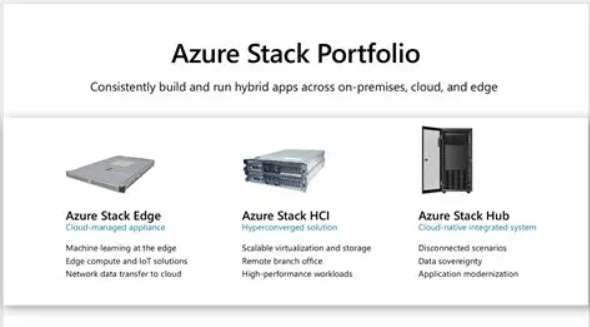
| Platform | Description |
|---|---|
| Azure Stack Hub | Full-blown hybrid cloud platform for regulated/edge |
| Azure Stack HCI | Hyperconverged infrastructure for virtualization |
| Azure Stack Edge | Edge computing appliance for quick AI/ML deployments |
📚 What You’ll Learn in This Blog Series
In this “Zero to Hero” blog series, we’ll walk through:
- How Azure Stack Hub works under the hood
- Setting up your first offer, plan, and subscription
- Admin tasks and hybrid integration with Azure AD
- Deploying real applications and automating with DevOps
- Advanced use cases and edge intelligence with IoT & AI
By the end, you’ll not only understand Azure Stack Hub—you’ll be ready to build, manage, and innovate with it.
✍️ Abhishek’s Take
Azure Stack Hub is more than just infrastructure; it’s a strategic pillar for hybrid and edge innovation. It brings the reliability of Azure to environments where cloud is not always accessible, empowering industries from manufacturing to defense.
For architects and developers seeking seamless hybrid solutions with full Azure compatibility, this is your launchpad to build real-world apps that run where you need them the most.
🏁 Next Up
In the next blog, we’ll dive into the architecture and core components of Azure Stack Hub, exploring how it functions behind the scenes and what makes it unique in the hybrid world.
🔖 Hashtags
#AzureStackHub #HybridCloud #AzureExpert #CloudInnovation #EdgeComputing #AzureStackSeries #ZeroToHero #MicrosoftAzure #CloudArchitecture #AbhishekKumar
 First Crazy Developer
Leave a comment