

✍️ By Abhishek Kumar | #FirstCrazyDeveloper
Every successful software project has one thing in common: a strong architectural foundation.
Choosing the right architecture is like picking the right blueprint before building a skyscraper—it determines whether your system scales seamlessly or collapses under pressure.
Let’s explore 6 software architectural styles that have shaped modern applications, with real-world examples and Azure-based use cases.
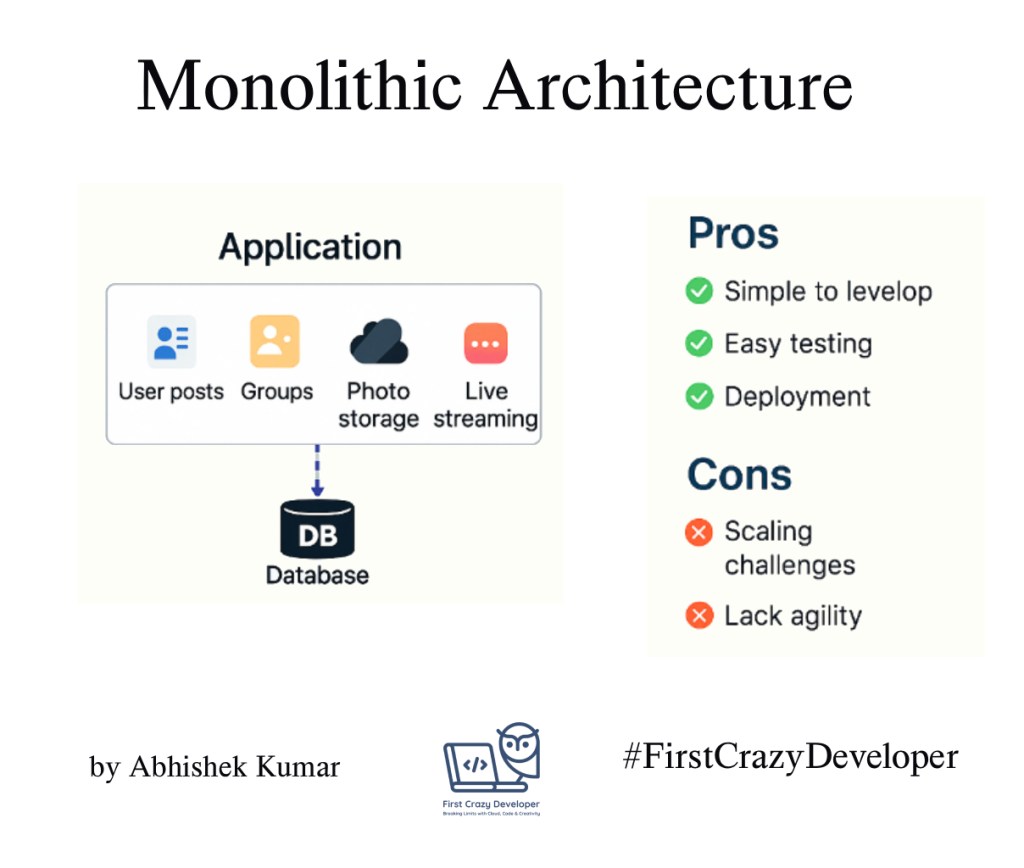
1️⃣ Monolithic Architecture – The All-in-One Package
A Monolithic Architecture bundles all application components—UI, business logic, and data access—into a single codebase.
🔹 Features
- Tight coupling of modules.
- Runs as one deployable unit (WAR, JAR, EXE, or container).
🔹 Best For
- Startups and small teams.
- Applications with simple requirements (blogs, internal CRMs).
🔹 Azure Example
Imagine building an Azure App Service Web App where user posts, comments, media storage, and authentication are in one codebase connected to an Azure SQL Database.
Perfect for MVPs and proof-of-concept projects.
🔹 Caution
As traffic grows, scaling the entire monolith for just one feature (say, “photo uploads”) becomes inefficient.
2️⃣ Microservices Architecture – Divide and Conquer
Microservices break down applications into independent, modular services communicating via APIs.
🔹 Features
- Services are autonomous.
- Each service can scale independently.
- API Gateway acts as an entry point.
🔹 Best For
- Enterprise-scale solutions (e-commerce, banking, SaaS).
🔹 Azure Example
An e-commerce platform hosted on Azure Kubernetes Service (AKS):
- Catalog service connects to Cosmos DB.
- Cart service uses Azure Redis Cache.
- Payment service integrates with Azure Key Vault.
- All traffic routed via Azure API Management.
🔹 Benefits
- Fault isolation: if “Discount service” fails, checkout still works.
- Easier deployments with CI/CD pipelines in Azure DevOps.

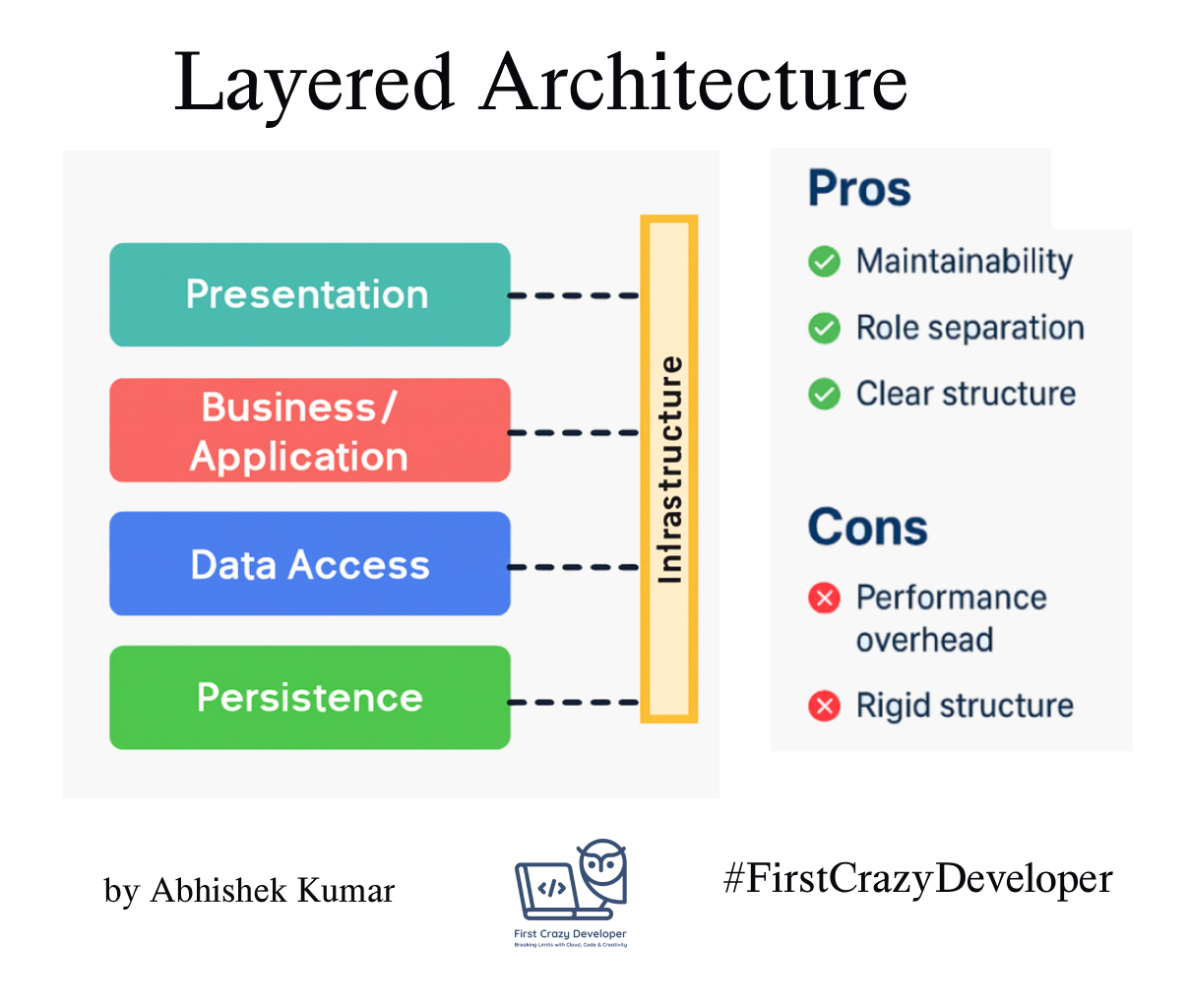
3️⃣ Layered Architecture – Build in Stages
The Layered Architecture divides software into logical layers, each responsible for a specific concern.
🔹 Common Layers
- Presentation → Web/Mobile front end.
- Business Logic → Core functionality.
- Data Access → Middleware for DB queries.
- Persistence → Database layer.
🔹 Best For
- Enterprise applications with well-defined roles (banking apps, ERPs).
🔹 Azure Example
A Loan Management System built using:
- Azure App Service for presentation layer.
- Azure Functions for business rules (loan eligibility).
- Entity Framework with Azure SQL for data access.
- Azure Storage for persistence (document archiving).
🔹 Benefits
- Enhanced maintainability.
- Role-based responsibilities across dev teams.
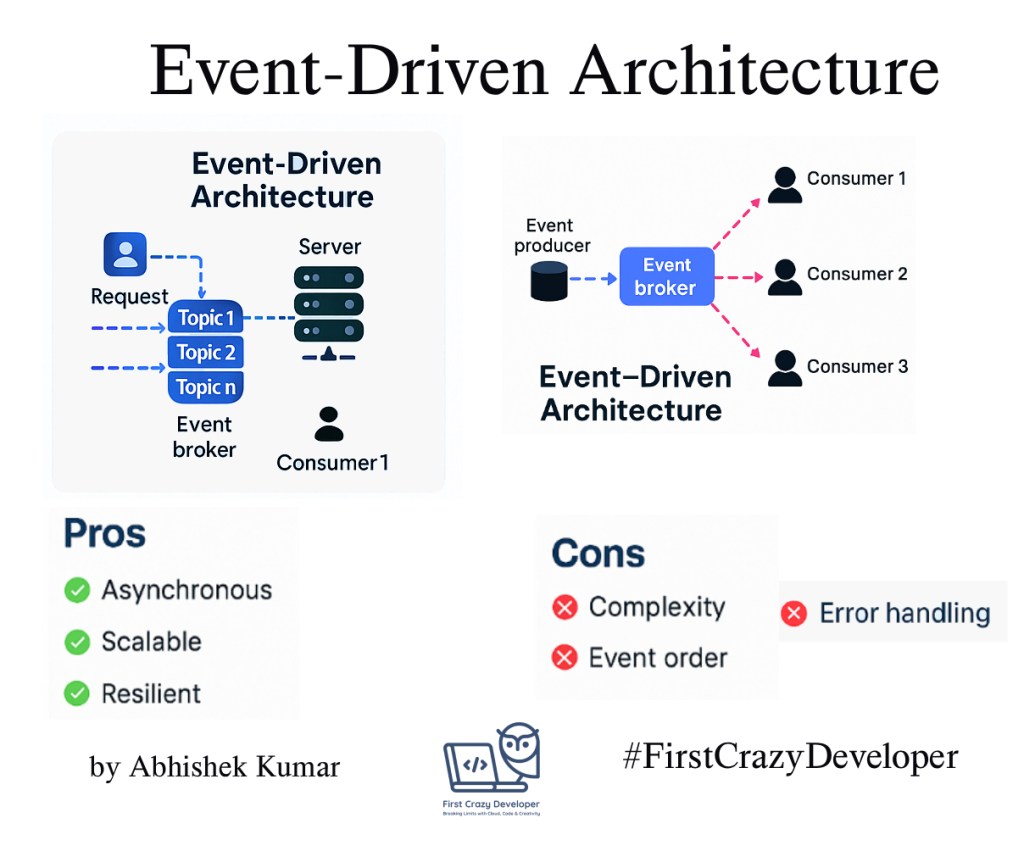
4️⃣ Event-Driven Architecture – Let Events Lead the Way
Event-driven systems react to events asynchronously. Producers generate events, while consumers subscribe and react.
🔹 Features
- Asynchronous communication.
- Decoupled producers and consumers.
🔹 Best For
- Real-time systems (stock trading, IoT, chat apps).
🔹 Azure Example
An IoT fleet monitoring solution:
- Trucks send telemetry via Azure IoT Hub.
- Events flow into Azure Event Hub.
- Azure Functions process alerts (e.g., overheating engine).
- Processed events stored in Azure Data Lake for analytics.
🔹 Benefits
- Highly scalable.
- Natural fit for streaming and real-time updates.
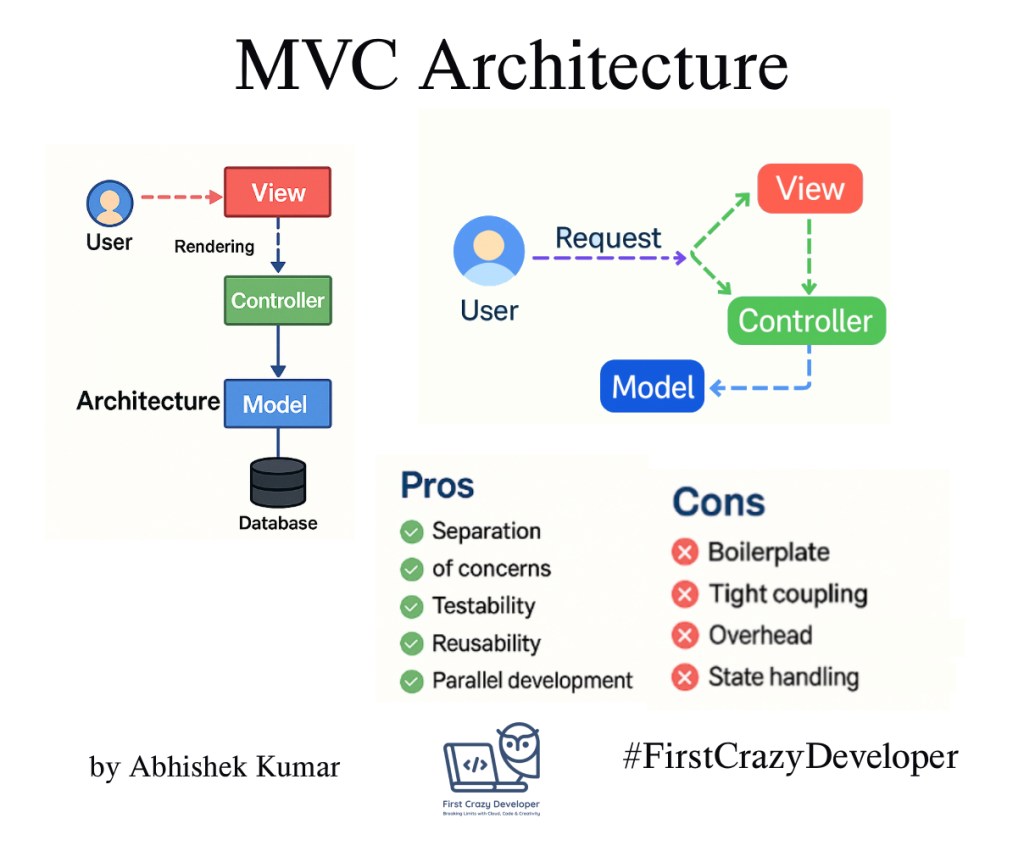
5️⃣ MVC Architecture – Separate Concerns, Streamline Development
The Model-View-Controller (MVC) pattern is the backbone of web and mobile frameworks.
🔹 Components
- Model → Data and business logic.
- View → UI presentation.
- Controller → Handles input and orchestrates flow.
🔹 Best For
- Web apps, portals, SaaS dashboards.
🔹 Azure Example
An ASP.NET Core MVC app deployed on Azure App Service:
- Model connects to Azure SQL Database.
- View renders Razor pages.
- Controller manages request-response lifecycle.
🔹 Benefits
- Clear separation of concerns.
- Easy unit testing and faster iteration cycles.
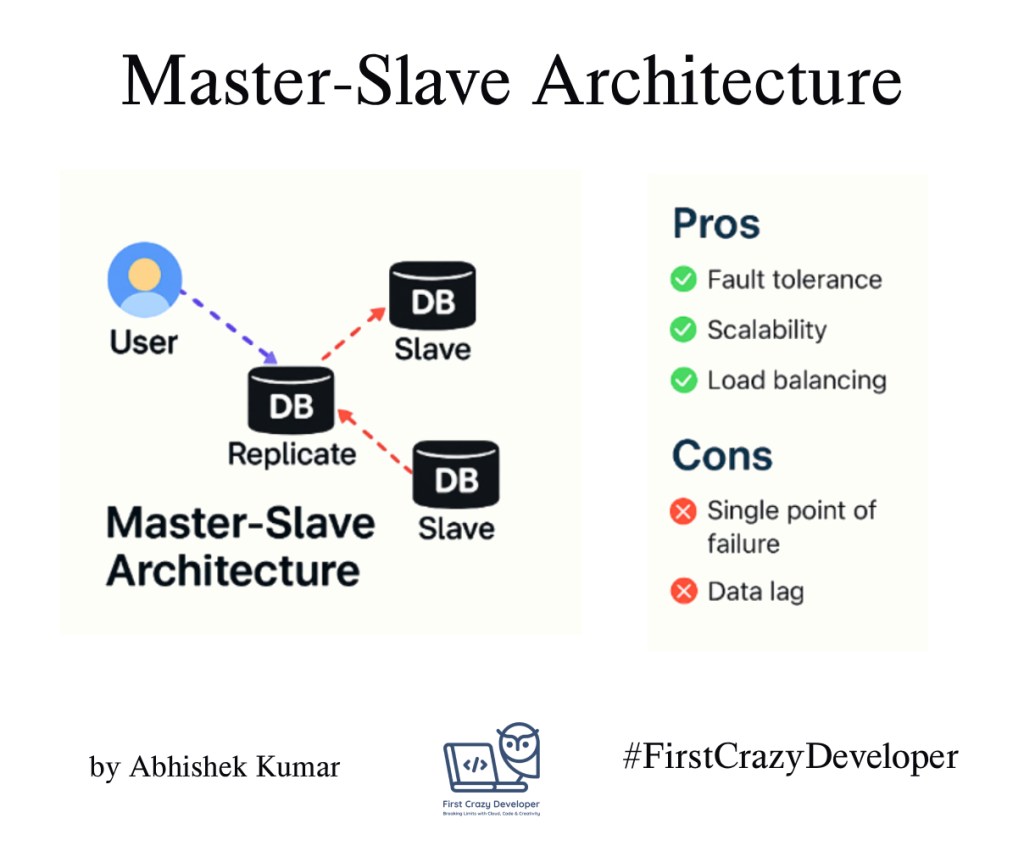
6️⃣ Master-Slave Architecture – One Leader, Multiple Followers
The Master-Slave model assigns one node as the master, while others act as slaves for redundancy or read optimization.
🔹 Features
- Master handles write operations.
- Slaves replicate data and serve read queries.
🔹 Best For
- Distributed databases.
- Fault-tolerant systems with high read demand.
🔹 Azure Example
Using Azure Database for PostgreSQL – Hyperscale:
- Master node handles all writes.
- Read replicas (slaves) spread across zones for faster read scaling.
- Ideal for analytics-heavy apps where reports need massive reads.
🔹 Caution
If the master node fails, recovery needs orchestration (though Azure automates this in managed DB services).
✨ Choosing the Right Style Matters
Each architecture comes with strengths and trade-offs.
- Startups → Monolithic (move fast).
- Enterprises → Microservices (scale and evolve).
- Regulated industries → Layered (maintain control).
- IoT & Streaming → Event-driven (real-time power).
- Dynamic UIs → MVC (separation of concerns).
- High read/write DBs → Master-slave (performance boost).
🚀 In Azure’s ecosystem, you can mix-and-match these styles. For example, a microservices app with event-driven messaging and layered internal services is common in modern cloud-native solutions.
✅ Final Thoughts
Software architecture is not just about patterns—it’s about aligning technology with business goals. The key is to pick the right style at the right time, ensuring scalability, resilience, and cost efficiency.
🔥 Abhishek’s Take
Architecture is not just about patterns, diagrams, or buzzwords—it’s about making choices that balance scalability, cost, and team agility.
In 2025, I see three strong trends shaping how we design software:
1️⃣ Microservices aren’t always the answer — many startups succeed faster with a monolith before breaking it down.
2️⃣ Event-driven systems are becoming the backbone of AI + IoT solutions, especially in Azure ecosystems where real-time data is king.
3️⃣ Hybrid architectures will dominate — no single style fits all, and the best systems blend approaches (Layered + Event-driven + Microservices).
👉 The winning formula? Choose what solves today’s business needs, but design with tomorrow’s scale in mind.
— by Abhishek Kumar | #FirstCrazyDeveloper
#SoftwareArchitecture #SystemDesign #Microservices #CloudComputing #Azure #EventDriven #MVC #TechLeadership #Scalability #FirstCrazyDeveloper
 First Crazy Developer
Leave a comment