
Category: azure
-
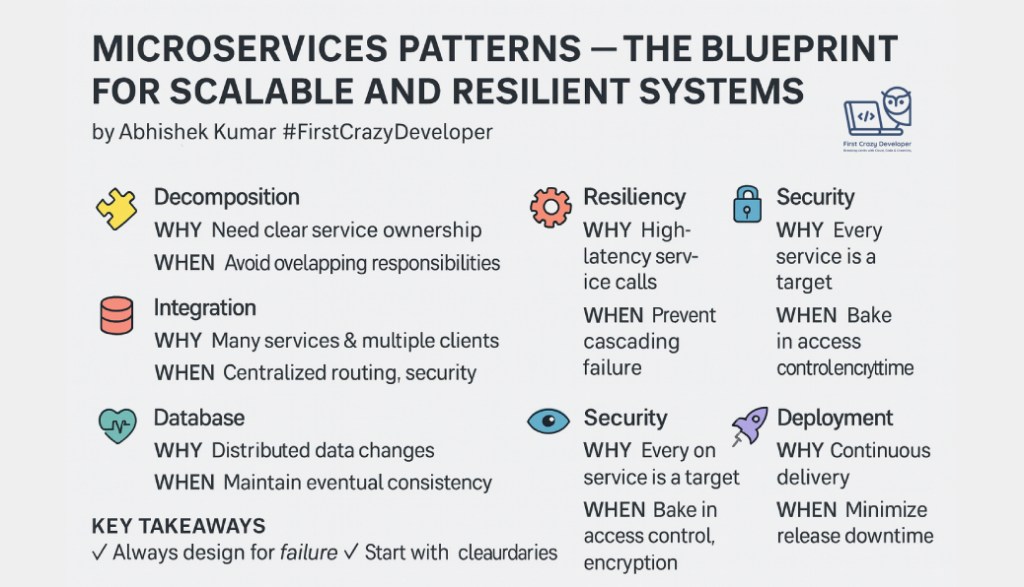
✍️ By Abhishek Kumar | #firstcrazydeveloper Microservices Architecture Leads to Chaos — Unless Designed Right Microservices are like independent puzzle pieces of a large system — each one performs a specific task, communicates through well-defined APIs, and can be deployed independently. When done right, microservices enable rapid scaling, continuous delivery, and fault isolation. But when…
-
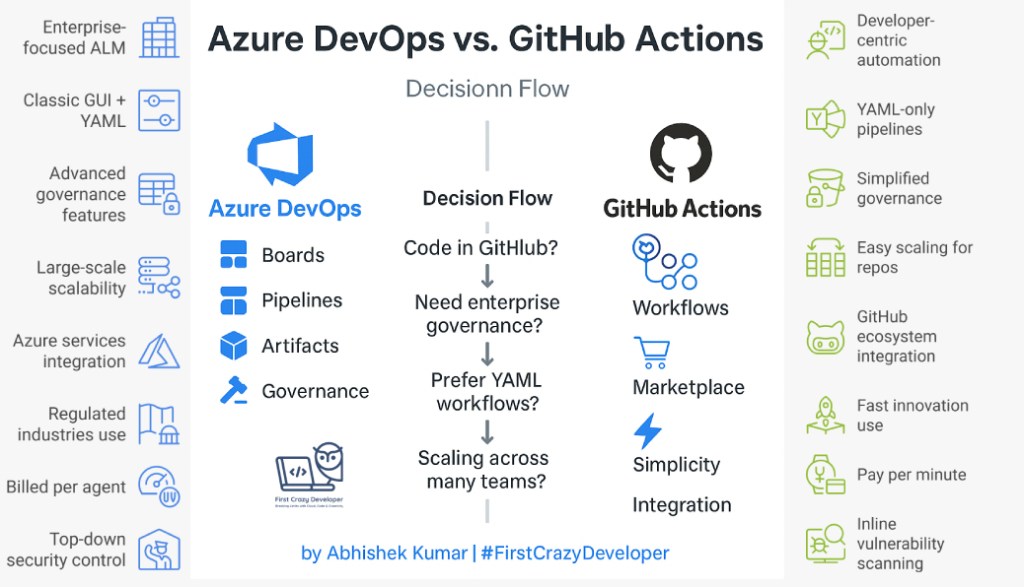
✍️ By Abhishek Kumar | #FirstCrazyDeveloper Business Impact: “Leveraging Azure AI Services to Accelerate Digital Transformation.” 🌍 Why Understanding This Matters Modern DevOps isn’t just about automation — it’s about aligning development velocity with governance, compliance, and collaboration. Every organization today — whether it’s a startup or a Fortune 500 enterprise — relies on a…
-
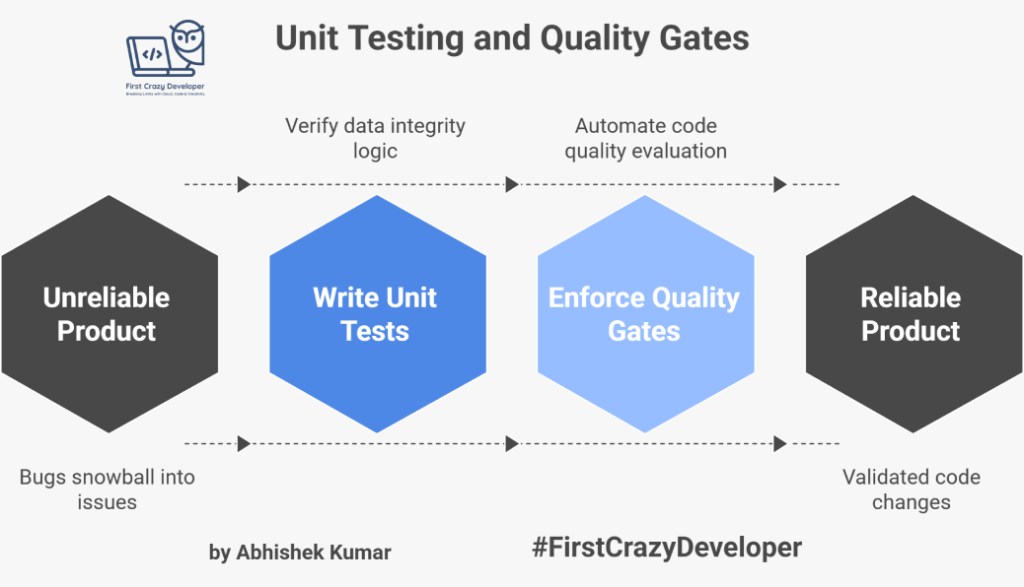
✍️ By Abhishek Kumar | #FirstCrazyDeveloper 🚀 Introduction: Code That Works Is Not Always Code That Wins Developers often say — “It works on my machine.”But what about your customer’s machine? Your colleague’s branch? Or production at scale? The truth: Code without tests is like a building without a foundation.It might stand today but collapse…
-

✍️ By Abhishek Kumar | #FirstCrazyDeveloper In today’s world of intelligent automation and AI-driven operations, event-driven agentic systems are becoming the architectural backbone for enterprises integrating AI, microservices, and human workflows. These systems are not just reactive—they are autonomous, adaptive, and context-aware, capable of executing tasks intelligently across diverse environments. This blog explores the transformative…
-
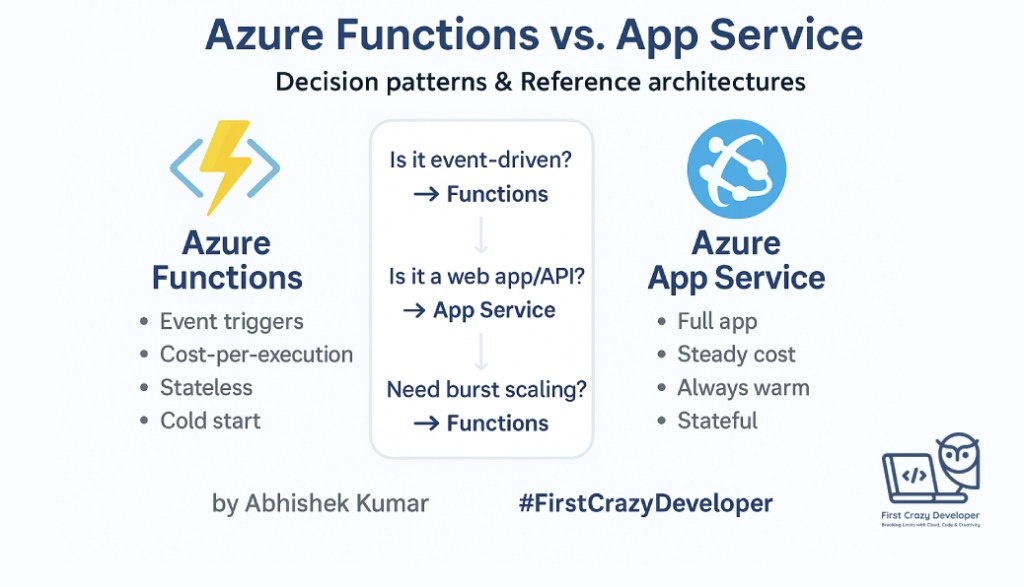
✍️ By Abhishek Kumar | #FirstCrazyDeveloper 🌍 Why This Comparison is Critical When building solutions in Azure, one of the first and most strategic decisions is choosing the right compute model. 🌍 Why this matters In Azure, you’ll often hear the question:👉 Should I deploy my workload in an Azure Function or in an App…
-
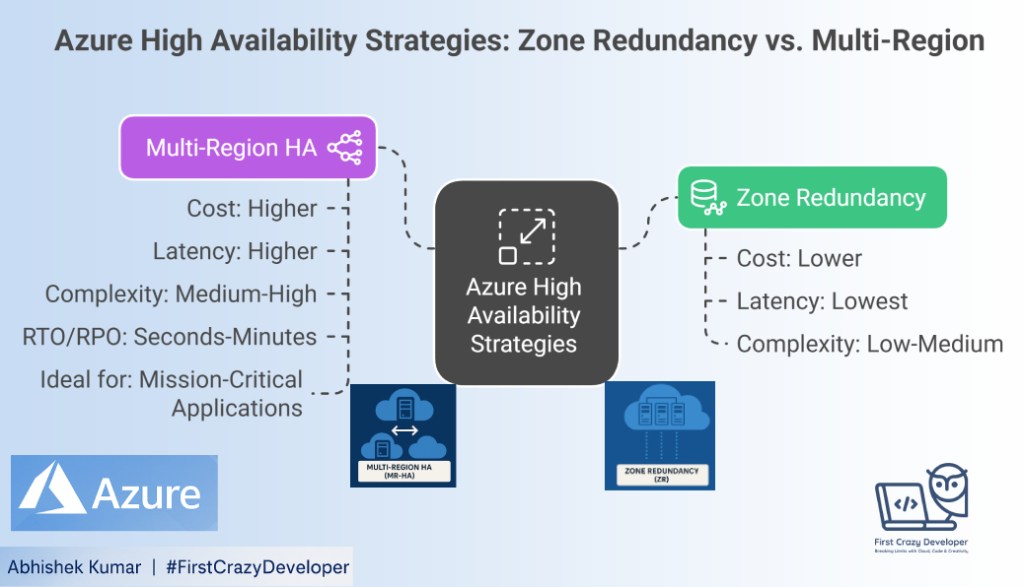
✍️ By Abhishek Kumar | #FirstCrazyDeveloper This document explores two powerful patterns in Azure for improving application availability: Zone Redundancy (ZR) within a region and Multi-Region High Availability (MR-HA) across regions. It provides a decision matrix to help you choose the right approach based on cost, latency, RTO/RPO, and operational complexity, along with reference architectures,…
-
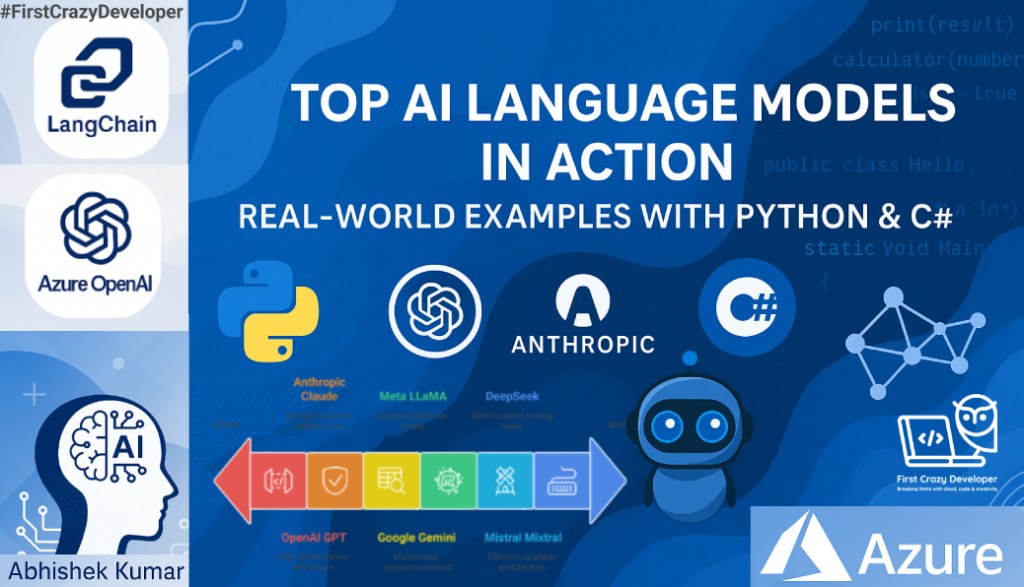
✍️ By Abhishek Kumar | #FirstCrazyDeveloper Artificial Intelligence has rapidly evolved over the last decade, and Large Language Models (LLMs) have become the core drivers of this revolution. From OpenAI’s GPT family to Meta’s LLaMA, Anthropic’s Claude, Google’s Gemini, and more — each ecosystem brings unique capabilities tailored for developers, researchers, and enterprises. In this…
-
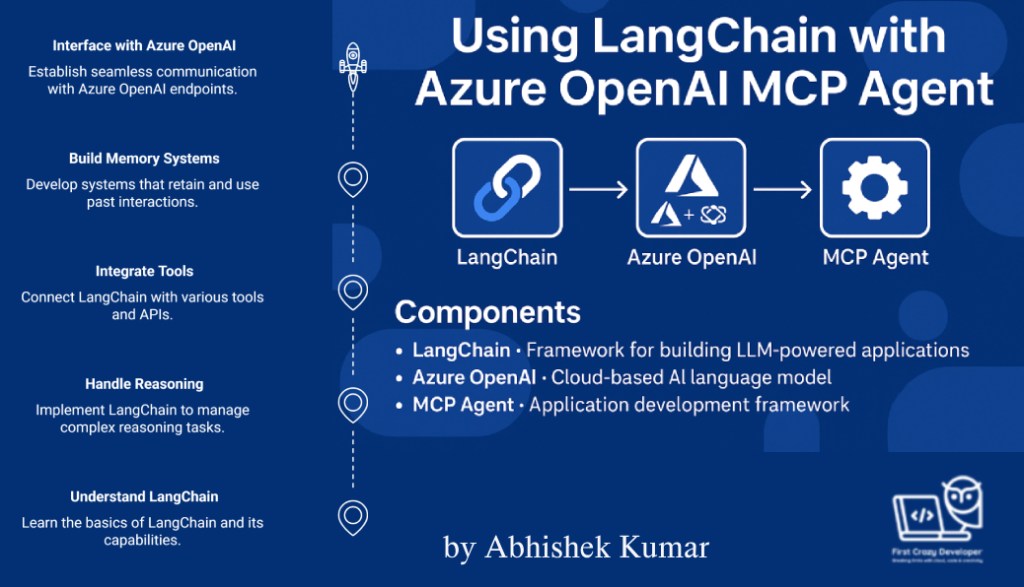
✍️ By Abhishek Kumar | #FirstCrazyDeveloper As Generative AI takes the spotlight across industries, the need for structured, multi-step reasoning and tool-enhanced agents is more critical than ever. In this blog, I’ll explain how you can integrate LangChain with your Azure OpenAI-powered MCP Agent—not just in Python, but with a C# equivalent, too. This blog…
-

✍️ By Abhishek Kumar | #FirstCrazyDeveloper Every successful software project has one thing in common: a strong architectural foundation.Choosing the right architecture is like picking the right blueprint before building a skyscraper—it determines whether your system scales seamlessly or collapses under pressure. Let’s explore 6 software architectural styles that have shaped modern applications, with real-world…
-
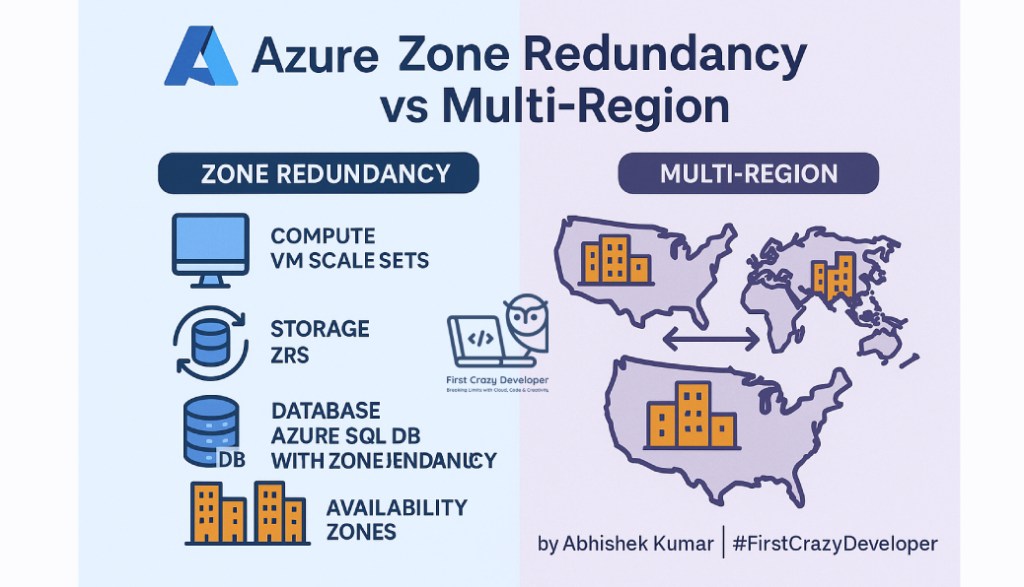
✍️ by Abhishek Kumar | #FirstCrazyDeveloper Cloud applications today cannot afford downtime. Whether you’re running a critical banking system, a healthcare application, or an e-commerce website, even a few minutes of outage can cause massive financial and reputational damage. That’s why reliability and high availability (HA) are key pillars in Azure architecture. Microsoft Azure provides…
 First Crazy Developer